

Pediatric Urology
Kids' Urinary Tract and Reproductive System Experts
Pediatric urologists are doctors who take care of children’s kidneys, bladders, ureters and genitals.
If your baby is born with a condition that affects these body parts our Nemours Children's Health team is here to help. We also treat children and teens with issues like urinary tract infections, hydroceles, hernias, vesicoureteral reflux and kidney stones.
The genital area of the body can be difficult for kids to talk about. Parents can feel overwhelmed too. We’re experts at making kids feel better. We also know how to explain complicated urological problems in a way that kids understand.
Our nationally known surgeons offer the latest in laparoscopic and endoscopic surgeries. These are surgical techniques that use smaller incisions. For your child, this means less pain, less risk for infection and a quicker recovery.
The Nemours Children's urology team does everything it can to help kids be their best and happiest.
Conditions & Treatments
We see a wide range of conditions — far too many to list here. The conditions we treat vary depending on the location and providers selected. Don’t see a condition listed? Call us.
Related Specialties
“It's amazing. You would never know he had surgery ... [By the very next day,] he was back to himself.”
“I think what I appreciated most was the level of commitment and involvement from the division chief and the whole team ..."
“The true miracle here is that after only 5 days of being home, Summer was pain free, running and being a normal 4-year-old.”
Top Urology Care for Kids
Spanning multiple hospitals and regions of the country, we treat thousands of kids for urology problems every year.
15,000+
2,968
12+
Delaware Valley/Philadelphia Highlights
We use the latest, least invasive surgical techniques. One of the techniques we offer is robotic-assisted laparoscopic surgery. This means smaller incisions (cuts) and pinpoint accuracy.
We’re part of the team that that treats children with spina bifida. We work together with orthopedists and neurosurgeons to manage all medical and surgical needs for children with spina bifida in one place.
State-of-the-art treatment for kids with overactive bladder. We offer sacral nerve stimulation, which is done by using a device that is placed along the side of the sacral nerves that are involved in bladder and bowel function. The device sends small signals that help the bladder communicate with the brain.
Top Urology Care for Kids
Spanning multiple hospitals and regions of the country, we treat thousands of kids for urology problems every year.
15,000+
2,968
12+
Florida Highlights
We use the latest, least invasive surgical techniques. One of the techniques we offer is robotic-assisted laparoscopic surgery. This means smaller incisions (cuts) and pinpoint accuracy.
A sensitive approach to help kids of all ages. Our Continence Center is available at Nemours Children’s Hospital, Florida and Nemours Children's Health, Lakeland, Jacksonville and Pensacola where our program helps kids control their urination (urine/pee) or bowel movements (feces/poop).
We’re part of the team that treats children with spina bifida. We work together with orthopedists and neurosurgeons to manage all medical and surgical needs for children with spina bifida in one place.
Top Urology Care for Kids
Spanning multiple hospitals and regions of the country, we treat thousands of kids for urology problems every year.
15,000+
2,968
12+
Our Highlights
We can handle even the most complex urology conditions. From urologic testing to reconstructive surgeries, our urology specialists have experience treating a full range of urology problems.
We use the latest, least invasive surgical techniques. One of the techniques we offer is robotic-assisted laparoscopic surgery. This means smaller incisions (cuts) and pinpoint accuracy.
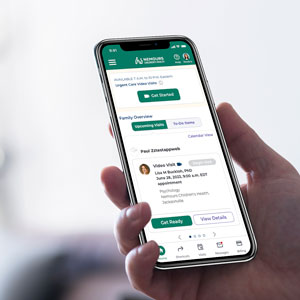
We keep kids out of the hospital. Through follow-up care, education and an active telehealth program, we’ve been able to prevent hospital readmissions after urology surgery. Our numbers are consistently below the national average.
We’re part of the team that that treats children with spina bifida. We work together with orthopedists and neurosurgeons to manage all medical and surgical needs for children with spina bifida in one place.
Featured Doctor
Meet Urology Division Chief Pamela I. Ellsworth, MD, Nemours Children’s Hospital, Florida. Getting to know and help families inspires her each day.
Featured Doctor
Meet Urology Division Chief T. Ernesto Figueroa, MD, Nemours Children’s Hospital, Delaware. Hear how he puts the whole family at the center of the often high-tech care that he delivers.