



What to Expect
Stay Informed and Empowered
If your child is having limb lengthening or limb reconstruction surgery, knowing what comes next can make all the difference.
At the Nemours Children’s International Limb Correction Center, we understand that this journey is both physical and emotional for your family. Our team is here to guide you through every step so you feel informed, supported, and confident throughout your child’s care.
General Surgery Timeline
Each child’s needs and treatment are unique. This timeline offers a general overview, and your child’s exact plan will depend on their condition, health status, and procedure. Your surgeon will discuss any potential risks or complications.
- Presurgery Phase
- Surgery & Hospital Stay
- Distraction Phase
- Consolidation Phase
- Final Recovery Stage
Initial Consultation
During this visit, you and your child will:
- Meet your child’s surgeon and care team
- Review your child’s diagnosis and treatment options
- Ask questions and discuss expectations
You’ll also learn about the two main surgical approaches — external fixation and internal rods.
- Your surgeon will explain which option is best for
- your child and how that choice affects recovery.
Preoperative Visit
Before surgery, you and/or your child will:
- Complete imaging, lab work, and medical evaluations
- Review the surgical plan
- View instructions to prepare for surgery
The Procedure & Immediate Recovery
- Surgery typically lasts 4-8 hours
- Hospital stay is usually 2-3 days depending on your child’s needs
During this time, our care team closely monitors your child’s comfort, mobility, and safety. Families receive step-by-step guidance on how to support their child once they leave the hospital.
This is when the bone is gradually lengthened.
Care at Nemours
- Office visits every 2 weeks
- Frame or internal rod adjustments 3-4 times per day
Physical Therapy
Physical therapy is one of the most important parts of your child’s recovery after limb lengthening or reconstruction surgery.
Regular physical therapy helps:
- Restore mobility and range of motion
- Improve balance and coordination
- Promote healthy circulation and bone healing
- Build strength and endurance
- Reduce pain and stiffness
- Build confidence
This is the bone-healing period.
- Most families return home during this stage
- Monthly video visits and X-ray reviews with your Nemours care team
Continued Physical Therapy
Physical therapy remains an important step in helping your child heal safely and regain movement. During this phase, most children attend physical therapy two to three times a week to maintain flexibility and prevent stiffness. Your child’s care team may adjust goals and therapy frequency as your child progresses.
For External Fixation Devices
- Return to Nemours for device removal (for out-of-town families)
- Limited weight-bearing for 4 weeks
- No cast required
For Internal Rods
- Gradual return to full activity
- Rod is typically removed 1-3 years later
Your Family's Commitment
While every child’s treatment journey is unique, here’s a general overview of what you can expect:
10-15
Office visits with your care team
2-3 days
Days in the hospital for procedures
30-60
Physical therapy sessions
3-4
Follow-up visits to monitor progress
Your care team includes nurses, therapists, Child Life specialists, and others. You get all the expert care and support you need, all in one place.
Our surgeons use the latest limb correction technologies. From advanced imaging to custom prosthetics, your child gets the highest level of care.
We’re focused solely on kids. Our therapists understand the physical and emotional toll limb differences and treatment can have on children
We have custom orthotics, prosthetics, and assistive devices on-site. You have access to our state-of-the art orthotics and prosthetics labs.
At Nemours, you have access to a full-service children’s hospital where the entire experience is designed with kids in mind.
- Slide 1
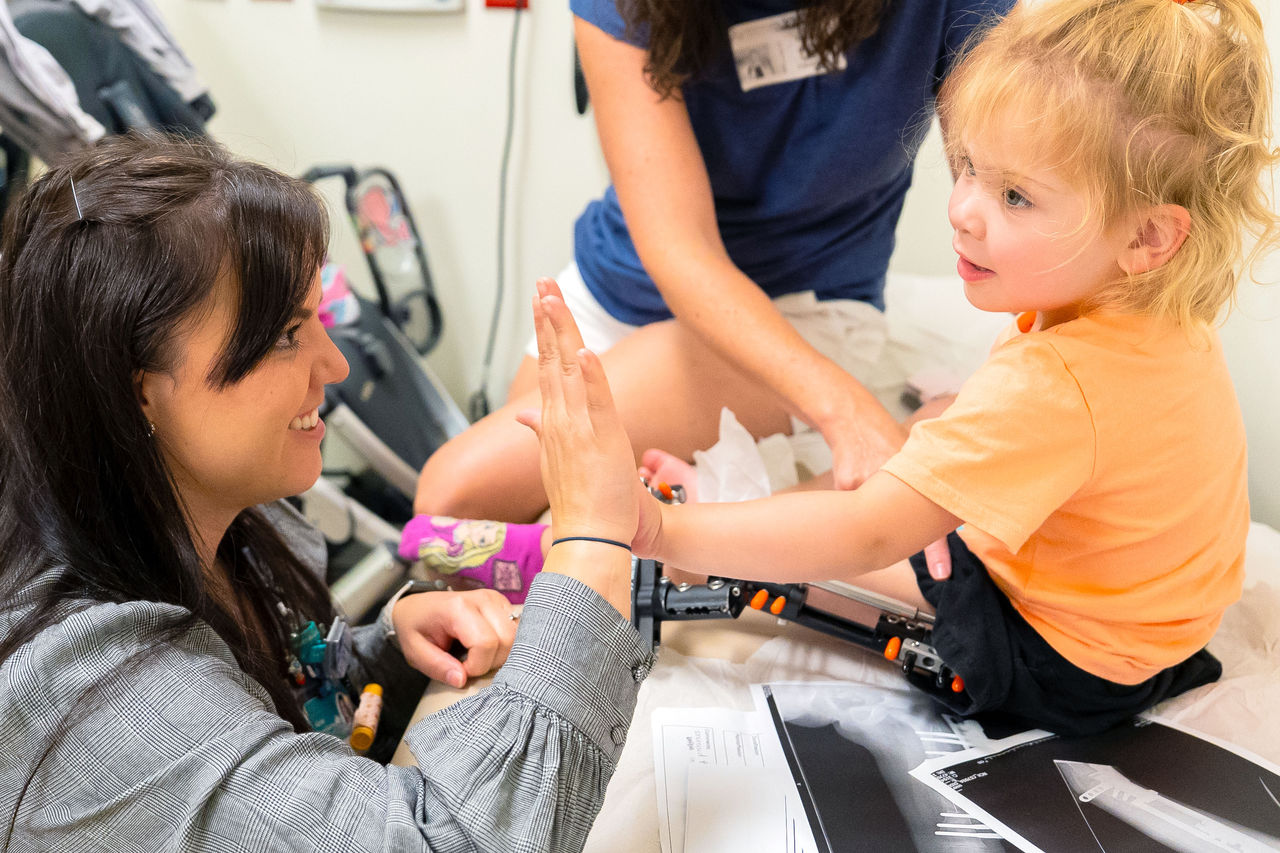
Our Approach to Care
We understand that limb differences can affect both the mind and body. That’s why we take time to listen to your concerns and explain each treatment option, so you feel confident in the decisions you make for your child.